A Burnt AC Contactor Is More Serious Than It Looks
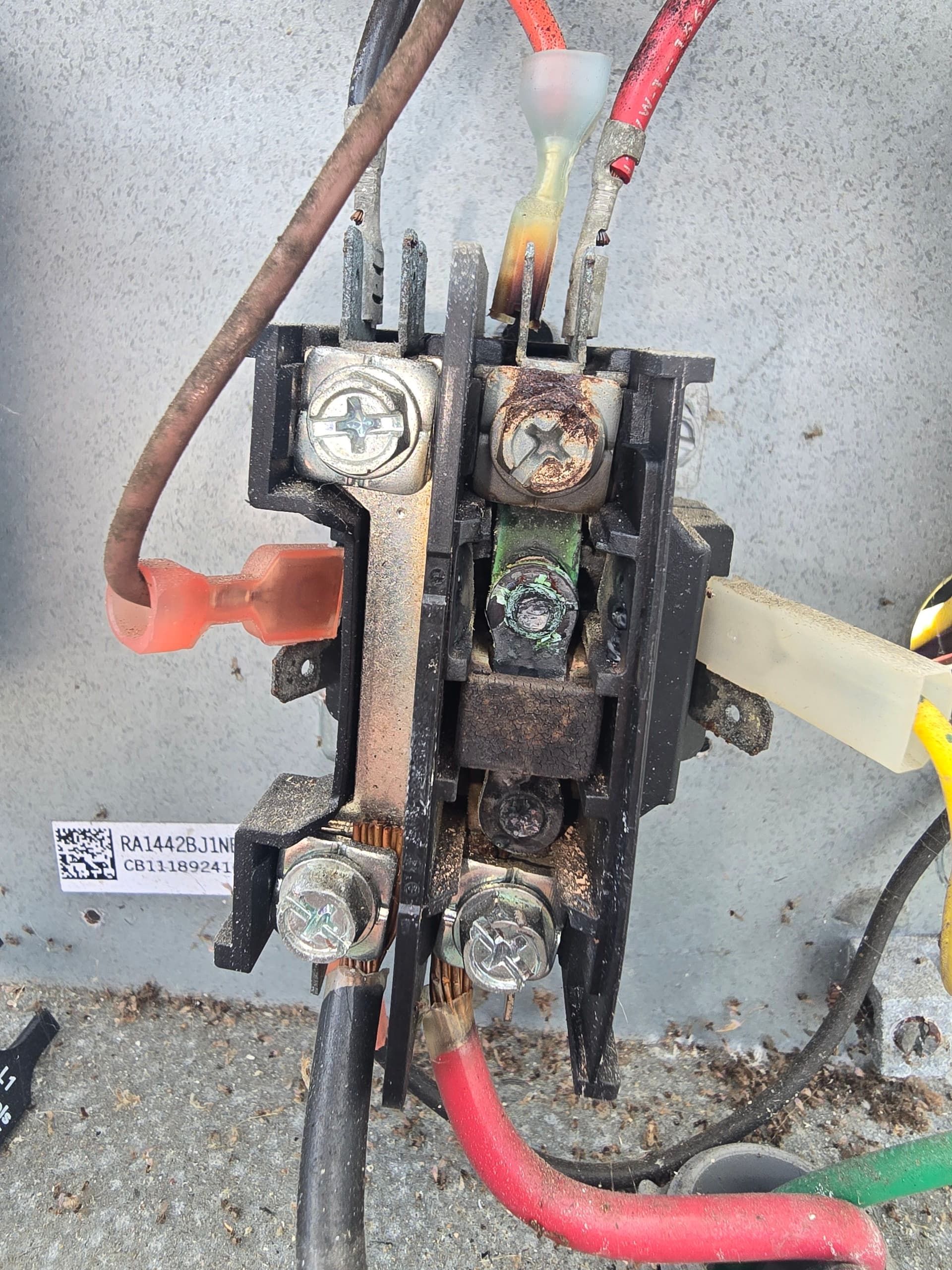
The contactor is one of the most hardworking electrical components in your entire AC system. It's basically a high-voltage switch that tells your unit when to run. And when it burns out - your system shuts down. Simple as that.
What you're seeing here is a badly burnt contactor. The heat damage, the corrosion, the discoloration on the terminals - this part had been struggling for a while before it finally gave out. This isn't something that happens overnight. It builds up over time, and most homeowners have no idea it's coming until their AC stops working entirely.
That's the frustrating part about electrical wear like this. There are usually warning signs - the unit short-cycling, not keeping up with the thermostat, making a chattering or clicking noise near the outdoor unit. But because those symptoms can seem minor, a lot of people put off getting it looked at. Then the heat hits hard and the system dies completely.
Catching a worn contactor early is almost always a cheaper fix than dealing with what comes after it fails. When a contactor burns through completely, it can cause damage to other components - the compressor, the capacitor, sometimes the wiring itself. What starts as a straightforward parts replacement can turn into a much bigger repair bill.
This is exactly the kind of thing we look for during a service call. A quick inspection of the electrical components inside the disconnect and the unit can tell us a lot about where things are headed. If your AC has been acting up - running inconsistently, struggling to cool, or just not behaving the way it should - it's worth getting eyes on it before it turns into an emergency.