A Clogged HVAC Drain Line Is More Serious Than You Think
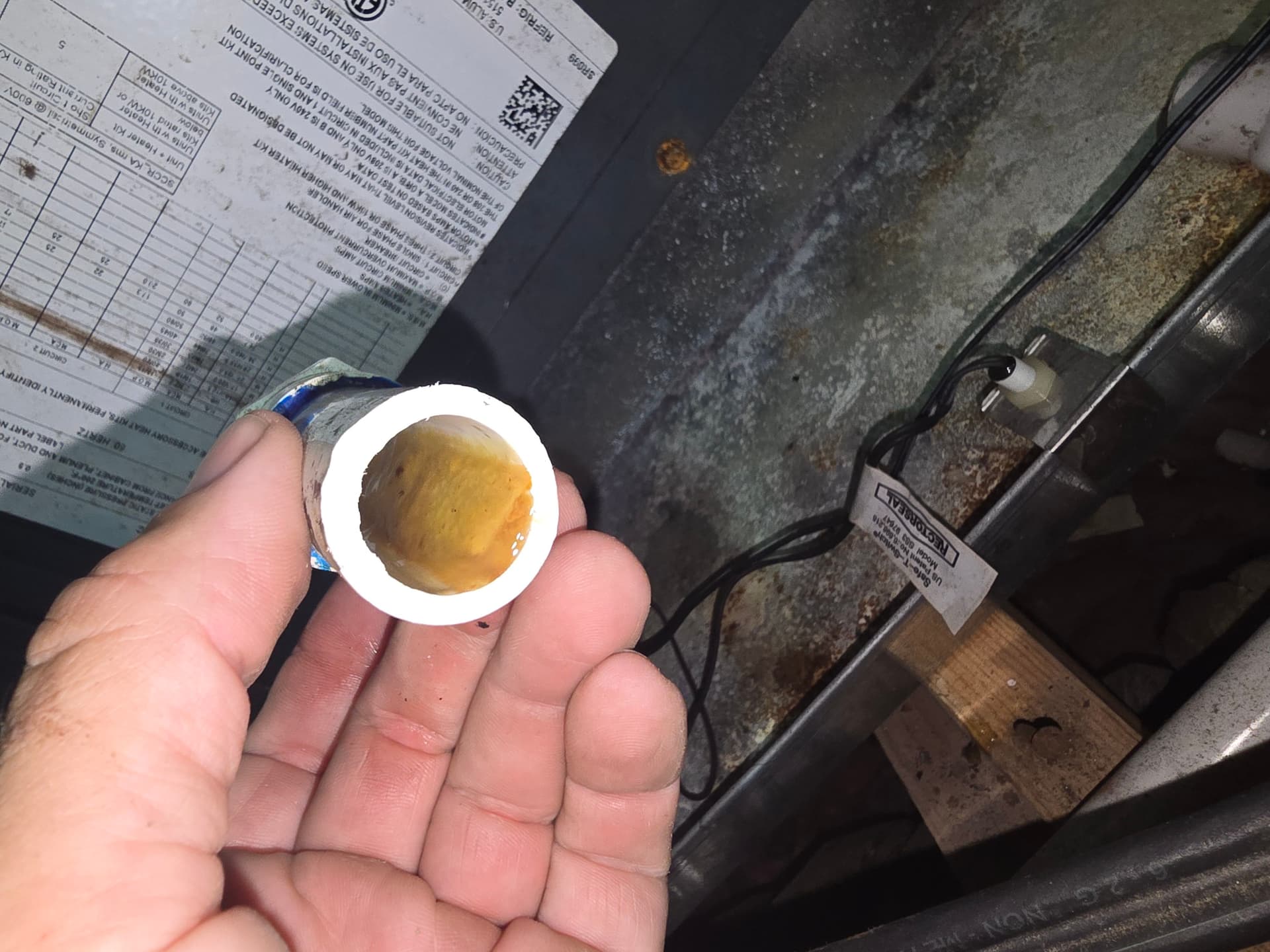
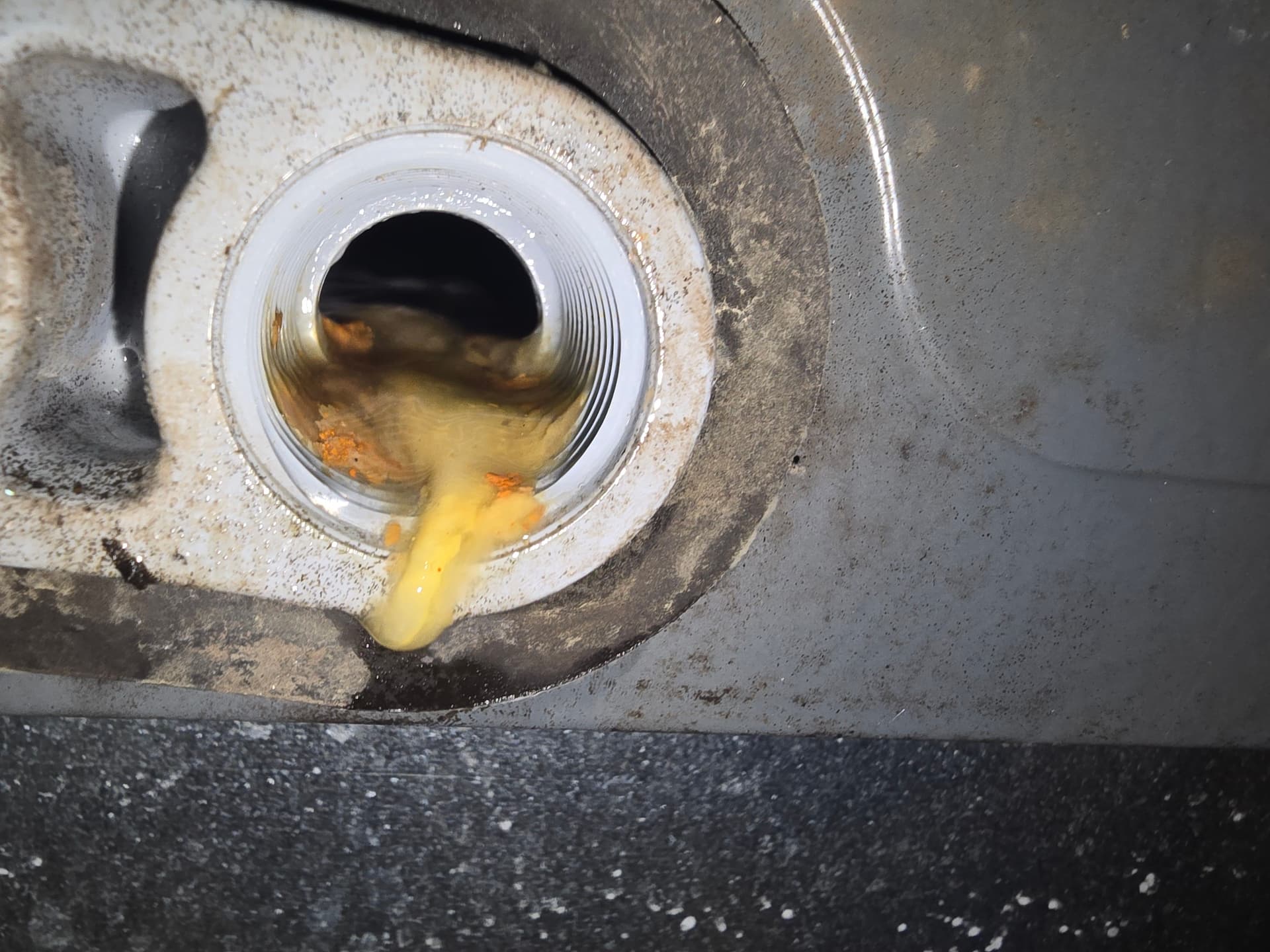
Most people don't think twice about their HVAC drain line - until water starts backing up somewhere it shouldn't. By the time you notice a problem, the buildup has usually been growing for a while. That's exactly the kind of slow-moving issue we deal with on a regular basis.
That thick, yellowish-brown sludge packed inside the drain line fitting is algae and condensate buildup. It forms naturally over time as moisture moves through the system. Left alone, it doesn't just slow drainage - it seals off the line completely. And once that happens, the condensate has nowhere to go but back into the unit or out onto the floor.
The downstream effects are what most people don't realize. We're talking potential water damage to ceilings, walls, and flooring. We're talking mold risk. In commercial settings, it can mean a shutdown. None of that is cheap to fix. Clearing the drain line before it fails is one of the lowest-cost, highest-impact things you can do for your system.
This is the kind of thing we catch and take care of during routine service calls - not just when something breaks. A blocked condensate line often goes hand-in-hand with systems that haven't been fully serviced in a while. So when we're in there, we're checking the whole picture, not just the one thing you called about.
If your system has been running longer than usual, your air feels less comfortable than normal, or you've seen any moisture around the unit, a blocked drain line could be the culprit. It's a quick fix when caught early. A lot harder to deal with after the damage is done.