Bouncing Subcool Readings Are Telling You Something
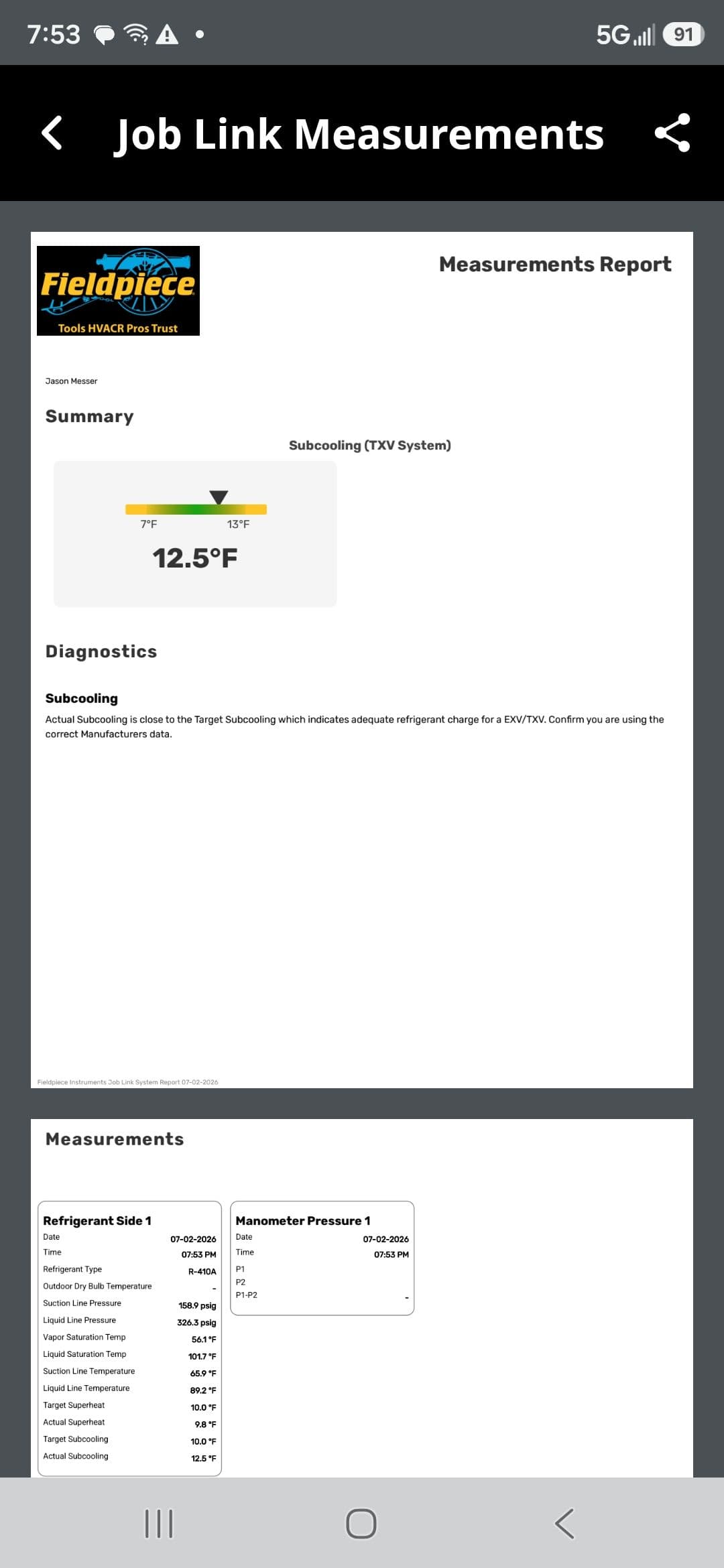
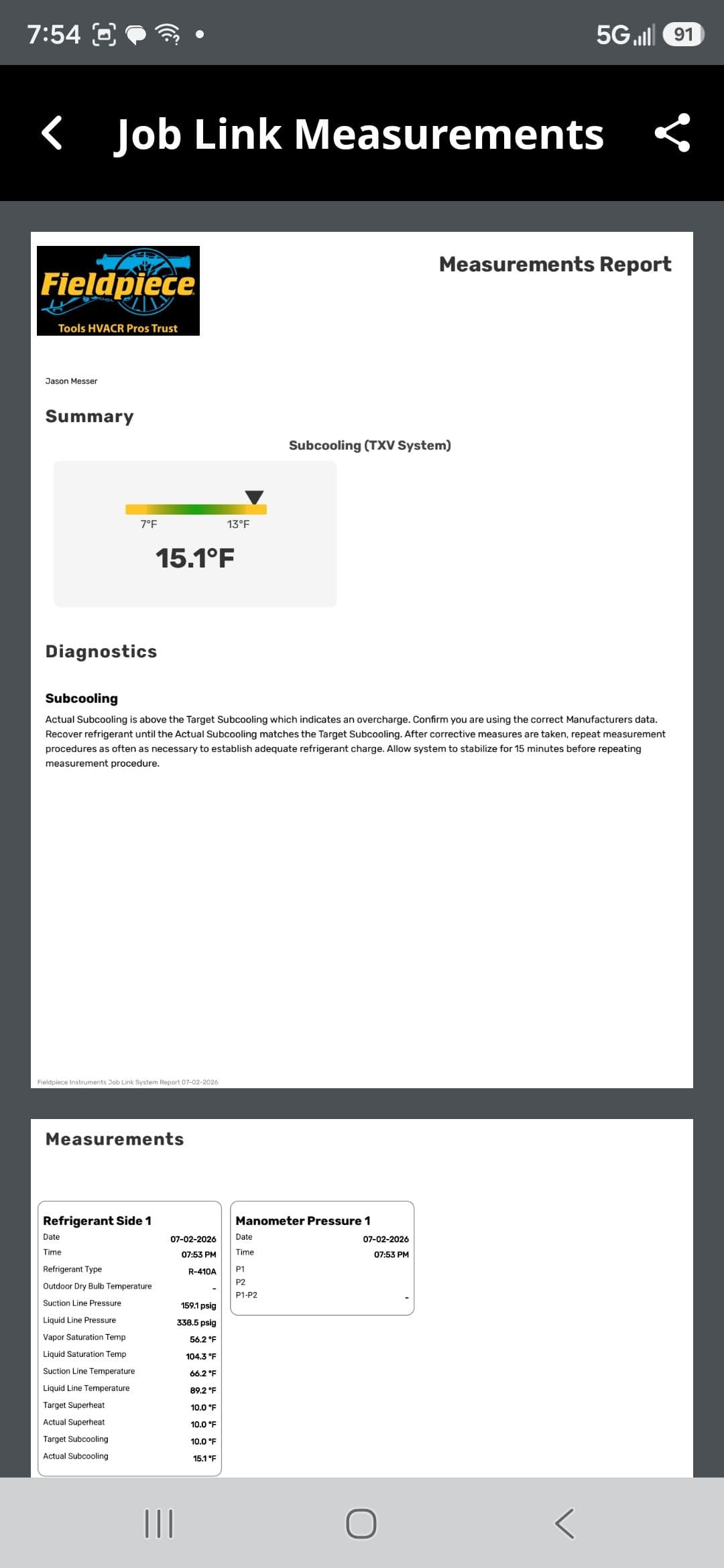
Subcooling is one of those measurements that a lot of homeowners have never heard of - but we pay close attention to it every single time we're on a job. It tells us a lot about what's going on inside your refrigerant circuit, and when it's bouncing around or sitting outside the target range, that's our cue to dig deeper.
Here's the basic idea: a TXV system has a target subcooling window it should be hitting. When the actual reading is climbing above that target, it can mean the system is overcharged. When it swings around unpredictably, it can point to a failing TXV - the thermostatic expansion valve that controls refrigerant flow into the evaporator coil. Either way, it's not something you want to ignore. A refrigerant circuit that's off balance is working harder than it needs to, and that extra strain adds up fast.
We use Fieldpiece Job Link instrumentation to capture these readings in real time and generate a full measurements report on the spot. That means we're not guessing. We have actual suction and liquid line pressures, saturation temps, superheat, and subcooling all logged and compared against manufacturer targets. It's the kind of data-driven approach that separates a real AC maintenance visit from a quick once-over.
Catching something like an overcharge condition or a struggling TXV early - before it causes a full system breakdown in the middle of summer - is exactly what our seasonal maintenance plans and AC tune-ups are built around. Small issues found early are almost always cheaper and easier to fix than the same issues found after a breakdown.
If your system has been acting off - short cycling, not cooling like it used to, or just running constantly without keeping up - there's a good chance the refrigerant circuit is worth a closer look. That's what we're here for.