New Construction Ductwork Done Right the First Time
Most people never think about their ductwork. And honestly, that's fine - as long as it was done right from the start. When it's not, you end up with hot and cold spots, rooms that never quite reach the right temperature, and an HVAC system that works twice as hard as it should.
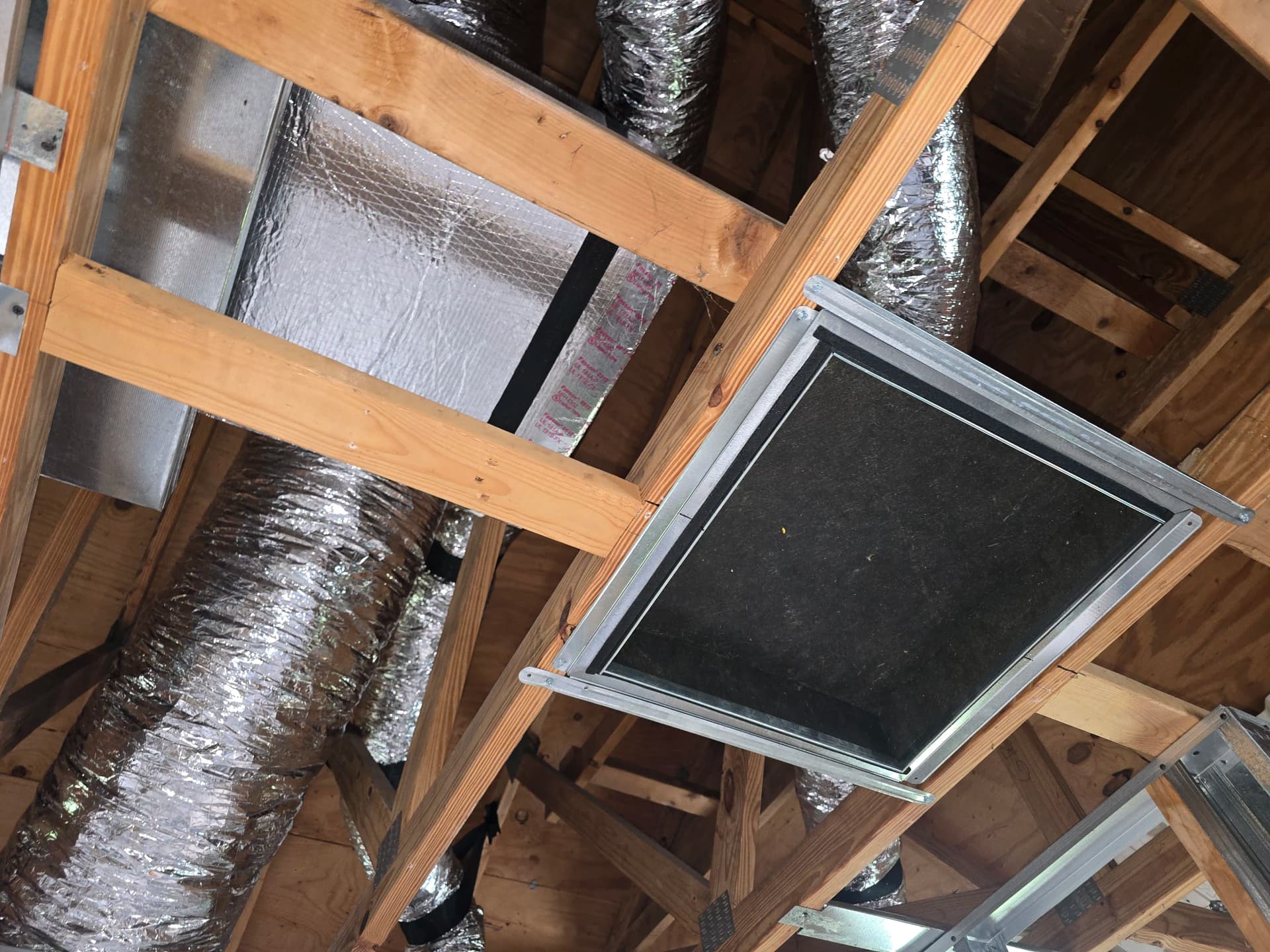
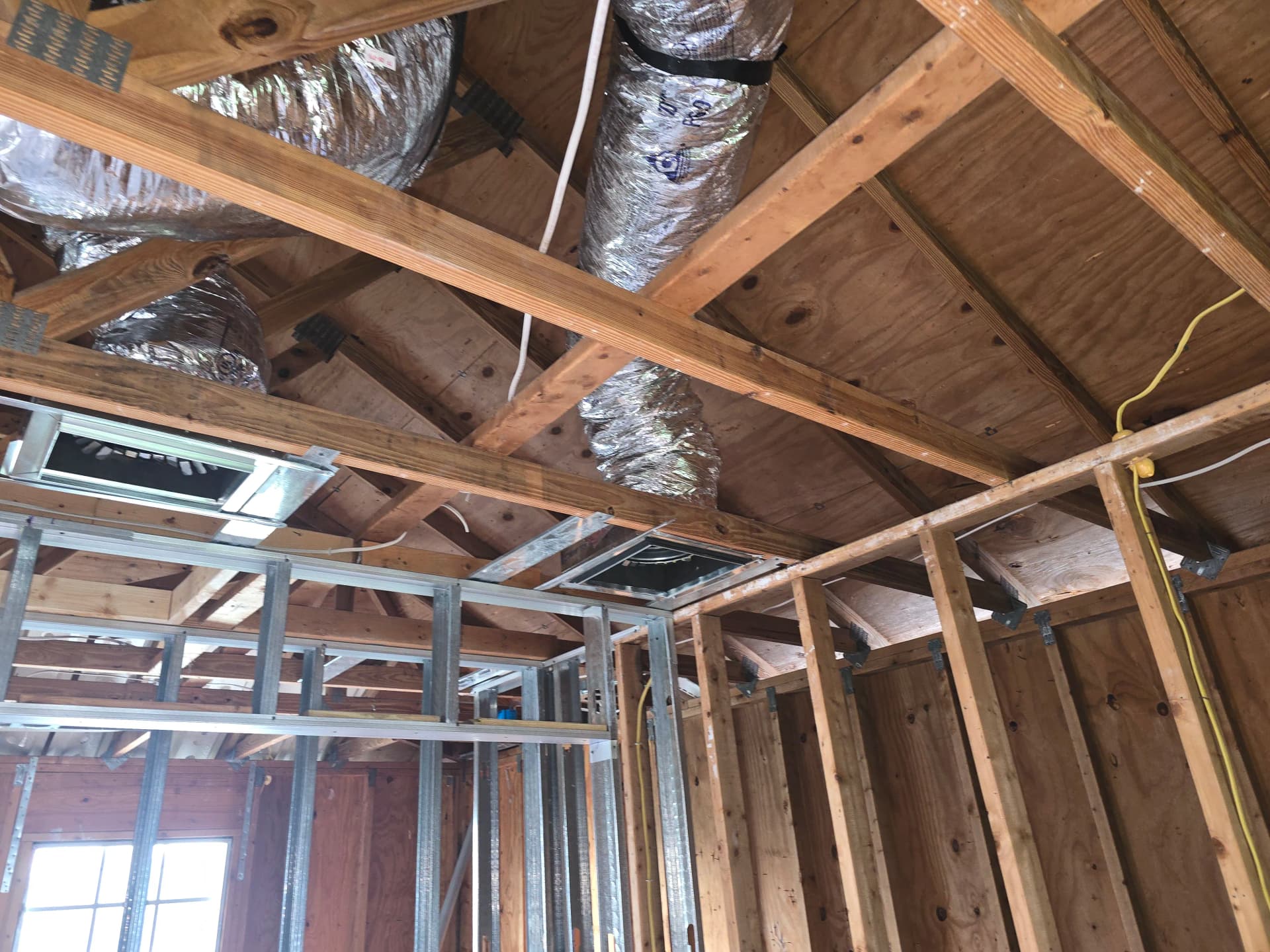
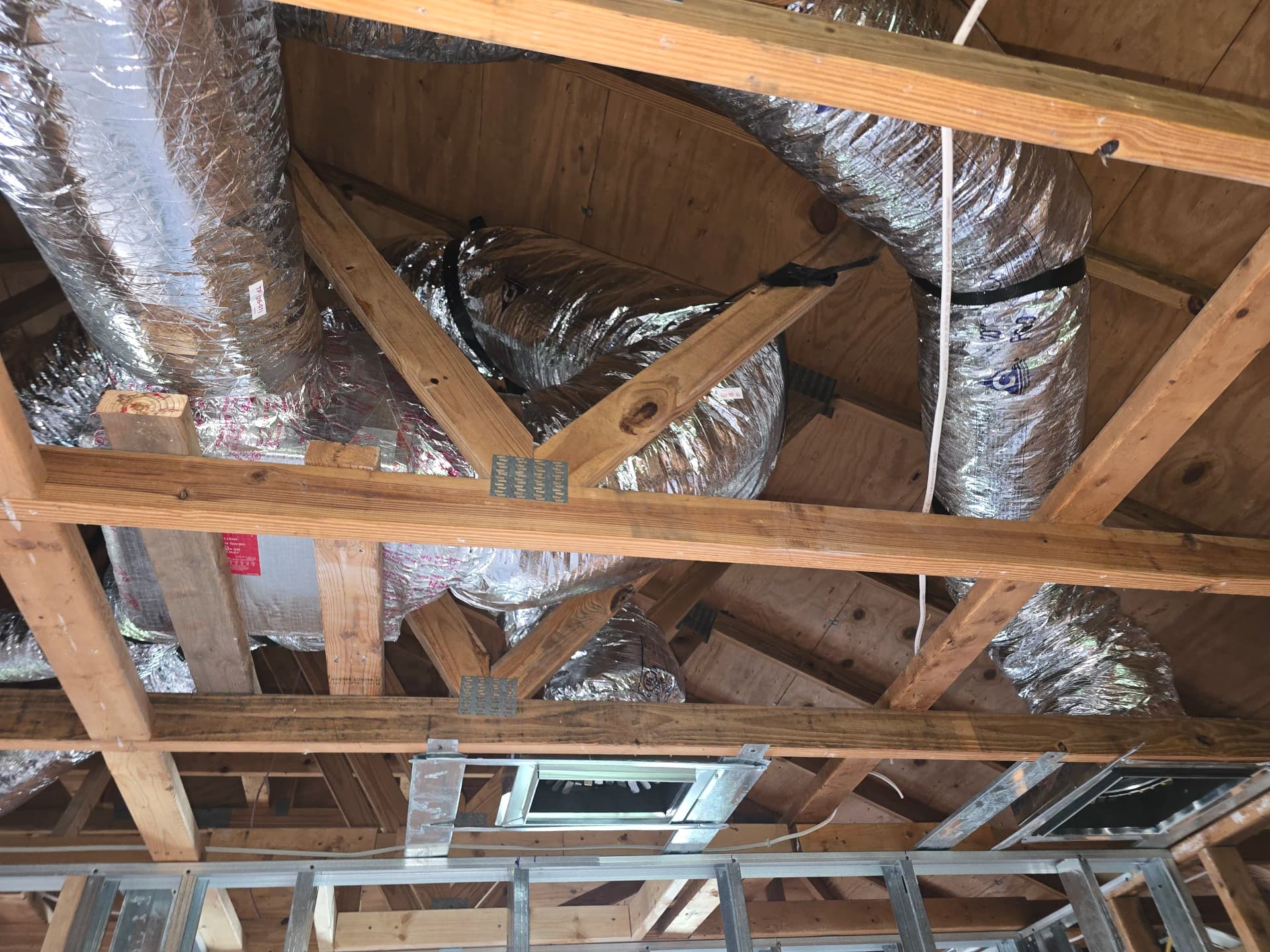
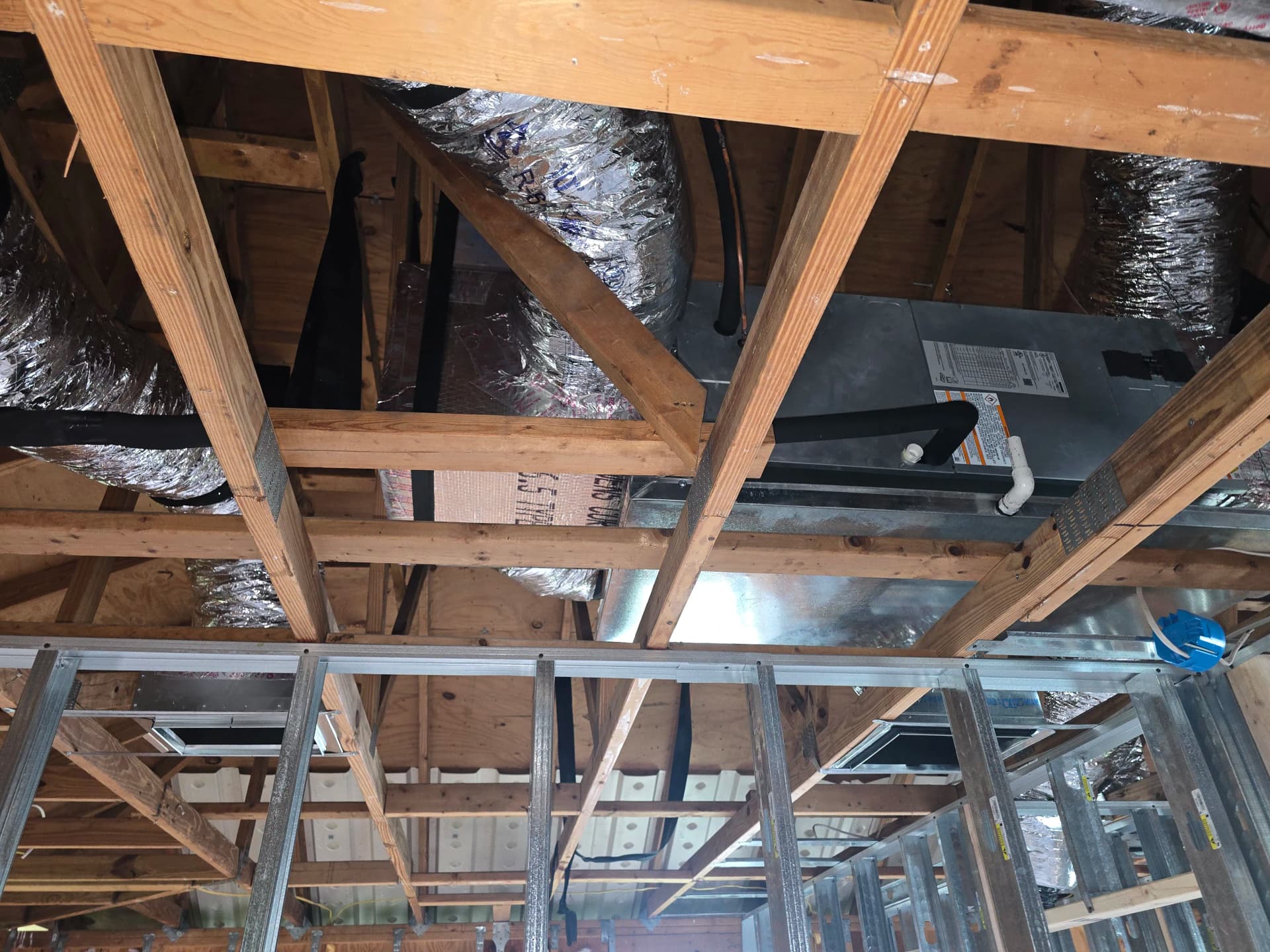
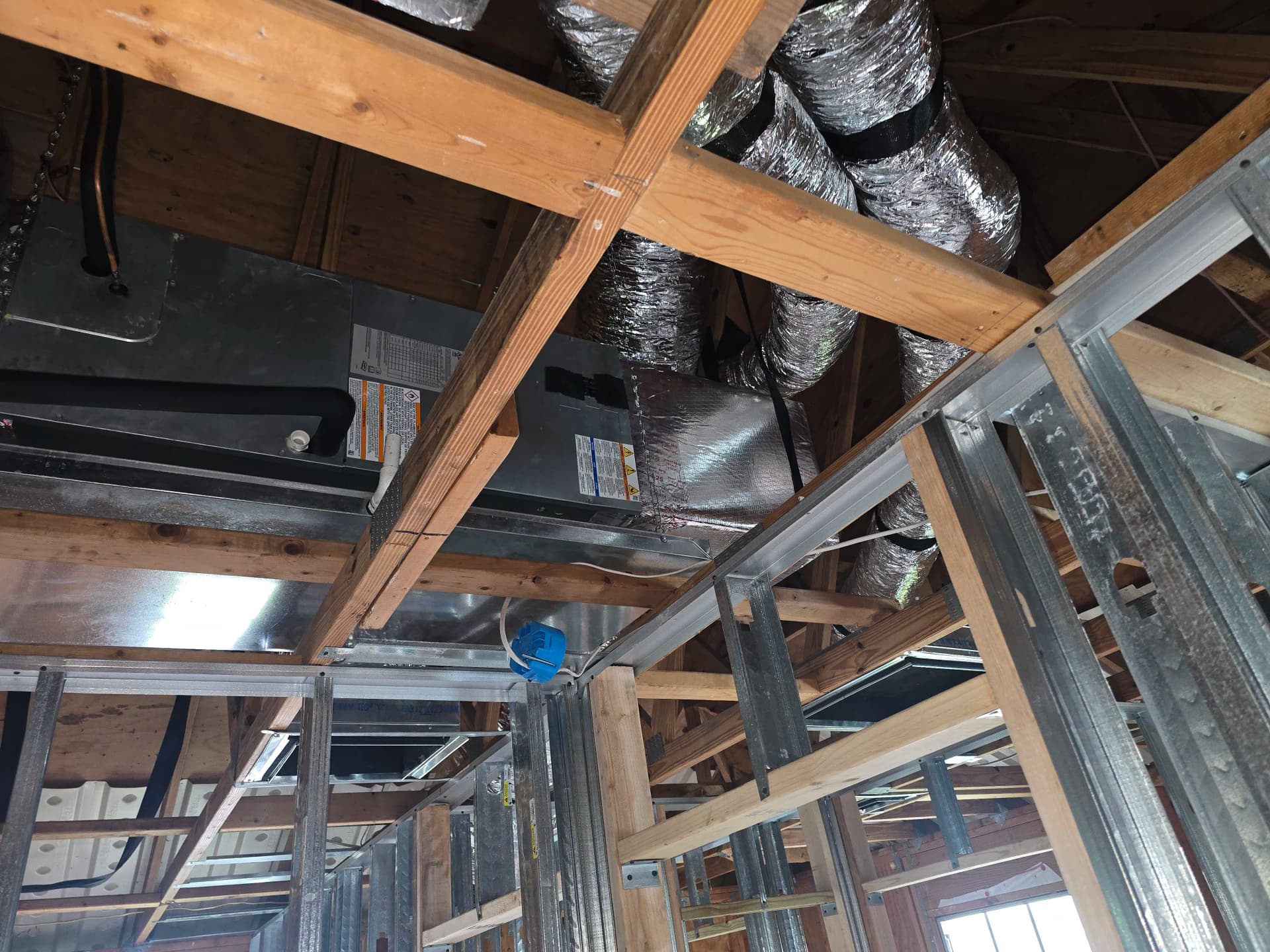
Here's what we were working with on this one - a new construction build, open framing throughout, everything still exposed. That's actually the best time to do ductwork right. No shortcuts, no working around finished ceilings. Just a clean layout with flexible insulated ducts routed through the framing exactly where they need to go.
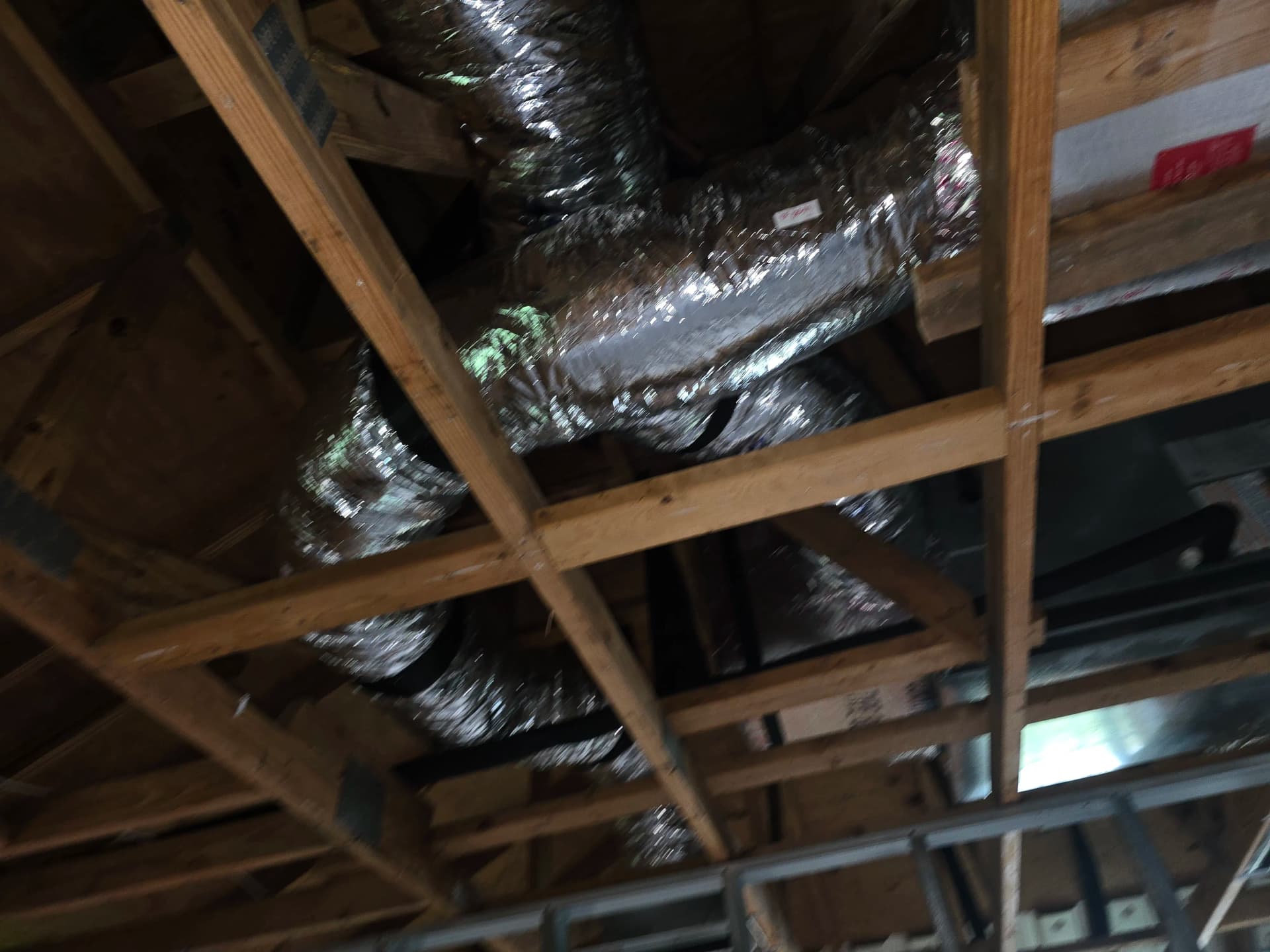
The air handler gets tucked into the framing above, supply boots get set flush into the ceiling framing at each room location, and the flex duct runs get supported and strapped so they hold their shape. Why does that matter? Because kinked or sagging ducts restrict airflow. A duct that's properly supported and routed moves air the way it was designed to - efficiently, and to every room evenly.
We also make sure the connections between the air handler, the plenum, and each individual run are tight. Leaky connections mean conditioned air escaping into the attic space instead of reaching the rooms below. That's wasted energy and higher bills, plain and simple. Getting it right at the rough-in stage means you won't be chasing comfort problems years down the road.
The ductwork is the part of your HVAC system you'll never see once the drywall goes up. But it's doing the heavy lifting every single day. We take that seriously - and it shows in how we approach every ductwork installation we do.